Saving money sounds simple, right? You have to spend less, keep more, that’s it. But in real life gets in the way. A surprise bill appears, food costs more than expected, a subscription renews when you forgot about it. Maybe you planned to save $50, but by the end of the month you’re wondering where the whole paycheck went.
That’s why micro saving has become such a useful idea for people who are new to money management. Instead of waiting until you have a large amount available, micro saving encourages you to put aside smaller amounts regularly.
In this article we will talk about how to guide smart micro saving for a beginner and how it works in real life. If you want to save money but do not understand how and where to start, this article is for you. So, let’s start to explore it.
What is micro saving?
Micro saving means regularly setting aside relatively small amounts of money to build savings over time. If you want to start saving you must need to know the psychology behind the micro saving.
The amount doesn’t have to be identical every time. You could save:
- A small amount every day
- A fixed amount every week
- A percentage of income
- A small amount after receiving income
- Spare money left after essential expenses
- Automated transfers into a savings account
The important part is that the system is realistic.
Consider this simple example:
| Saving habit | Approximate contribution | Approximate yearly contribution |
| $1 per day | $30/month | $365 |
| $2 per day | $60/month | $730 |
| $5 per day | $150/month | $1,825 |
| $10 per week | ~$43/month | $520 |
A person who saves $1 today has not solved their entire financial future. But they’ve created a behavior that can potentially be repeated tomorrow.
How to Start Saving Money with No Experience?
If you’ve never saved consistently, how to start saving money can feel like a much bigger question than it really is. You need a reasonably accurate picture of what comes in, what goes on, and what amount can safely be set aside.

Start by observing rather than judging yourself. Track expenses for a few weeks and look for patterns. Once you understand the pattern, choose a small target. The goal for your first month isn’t to prove that you’re financially perfect.
1: Find your starting point
Write down:
- Monthly or weekly income
- Housing costs
- Food
- Transportation
- Education
- Utilities
- Debt payments
- Subscriptions
- Other regular expenses
- Irregular expenses
Then look at what’s left. If nothing is left, don’t panic. It may mean the priority is reviewing expenses, increasing income where possible, or dealing with urgent financial pressure before trying to save aggressively. Consumer Financial Protection Bureau provides practical ideas for building savings for emergencies and future financial needs.
2: Choose a tiny but meaningful target
Your first target could be modest.
For example:
“I will save $10 every week for the next month.”
That’s much easier to evaluate than:
“I need to become better with money.”
After four weeks, you can decide whether $10 is comfortable, too difficult, or perhaps easier than expected.
3: Give money a job
A savings goal works better when it has a purpose.
Possible goals include:
- Emergency savings
- Education expenses
- A planned purchase
- Travel
- Moving costs
- Future household expenses
- A financial cushion
The goal doesn’t need to be exciting. A mini save can change your saving habit even $5 a day saving blueprint makes you wealthy.
Compounding for Beginners: Coins to Growth
In simple terms, compound growth can occur when money earns a return and that return remains invested or deposited so it can contribute to future growth. Investor.gov explains compound interest as earning interest on money saved and on interest that money has already earned.
The effect can become more noticeable over longer periods. And savings-account interest should not be confused with investment returns, which can fluctuate and involve risk.
A simple compound-interest example
Suppose you put $100 into account earning a hypothetical 5% annual rate, with interest compounded annually and no additional deposits.
After one year:
$100 × 1.05 = $105
After two years:
$105 × 1.05 = $110.25
That extra $0.25 in the second year comes from earning on the previous interest.
Investor.gov uses essentially this type of example to explain how $100 earning 5% annually could become $105 after one year and $110.25 after two years.
What if you keep adding money?
Regular contributions can become a major part of the final balance.
A compound-interest calculator typically considers:
- Initial amount
- Regular contribution
- Time
- Estimated rate
- Compounding frequency
Investor.gov provides a free compound-interest calculator with these types of inputs.
For beginners, the practical lesson is simple:
Money + regular contributions + time + applicable growth = potentially larger savings.
But fees, taxes, inflation, changing rates, and withdrawals can reduce the actual result.
Savings App Comparison for First-Time Savers
For first-time savers, the most important question is actually, “What does this product do with my money, and what are the rules?” Before choosing one of the many first-time saver apps or fintech services available in different markets, check who operates the service, whether it is regulated where applicable, where deposits are held, what fees apply, how withdrawals work, and what protections exist.
An app available to one person may not legally or practically be available to another. So rather than publishing a random best apps list that becomes outdated, here’s a framework you can reuse whenever you compare a financial app.
Automation can be useful when it moves money according to a schedule you can afford. For example:
Payday → automatic $10 transfer → savings account
That can reduce the temptation to spend the money first.
Some financial services offer transaction round-ups, where purchases are rounded to a chosen amount and the difference may be directed toward savings.
But check the actual mechanics. A feature that saves a few cents per transaction isn’t a substitute for a proper savings plan if your goal requires larger contributions. Technology changes quickly. A responsible comparison should prioritize:
security + fees + access + regulation + transparency + suitability
Financial Literacy Basics Every Saver Needs
The financial literacy basics are the boring-sounding things that become incredibly useful when money gets complicated. It means knowing the difference between saving and investing. Consumer Financial Protection Bureau explains financial well-being and how people can build greater control over their everyday finances and financial goals.
Investor.gov describes savings as generally suitable for short-term goals and emergency funds, while investing involves putting money into assets with the expectation of a return and accepting market risk. A savings account and an investment account aren’t interchangeable because both can potentially grow your money.
Saving vs. investing
| Saving | Investing |
| Often used for short-term goals | Often used for longer-term goals |
| Usually focuses on accessibility and stability | Involves market or asset risk |
| May earn interest | May generate returns from price changes, interest, dividends, etc. |
| Generally easier to access | Value can fluctuate |
| Suitable for emergency reserves in many cases | Not generally a substitute for readily accessible emergency savings |
Investor.gov also recommends considering goals, finances, high-interest debt, emergency savings, and risk before moving into investing decisions.
Opening Your First Micro Savings Account
If you’re opening your first account, slow down and read the fee schedule, interest terms, withdrawal conditions, minimum balance requirements, and eligibility rules. Depending on your country, you may also have different requirements for identification, age, account ownership, or parental/guardian involvement.
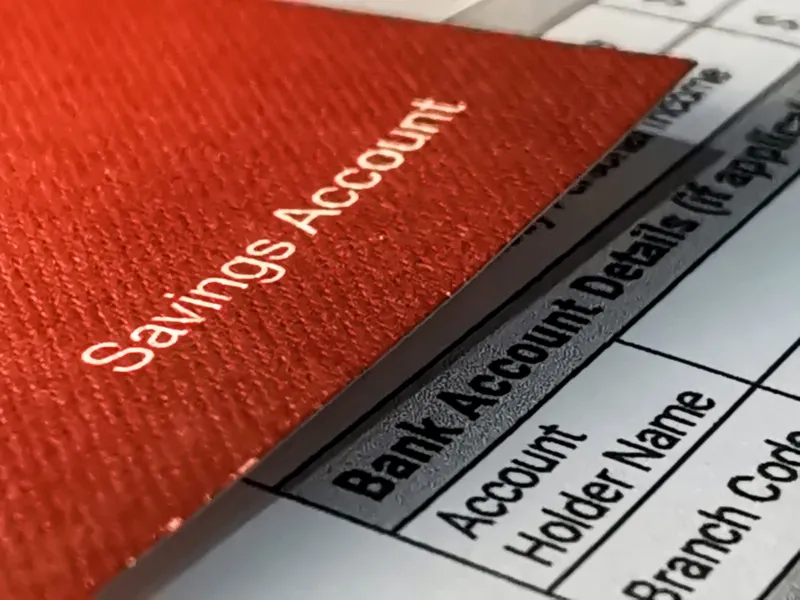
If you’re under the legal age to independently open a particular account, a parent or guardian may need to be involved. And make sure you know whether you’re opening a genuine deposit account, a payment wallet, a budgeting product, or an investment account.
After opening the account:
- Use a unique password.
- Turn on available multi-factor authentication.
- Never share one-time verification codes.
- Don’t click suspicious financial links.
- Use official applications and websites.
- Turn on transaction notifications where available.
- Review transactions regularly.
And if something feels weird an unexpected login, strange transfer, or suspicious message don’t shrug it off.
Common Micro Saving Mistakes
A sustainable savings strategy needs to fit your actual cash flow. It also needs to leave room for irregular expenses and financial emergencies. Investor.gov warns readers about investment promotions that promise high returns with little or no risk, pressure people to act quickly, or make wealth-building sound effortless.
Common saving mistakes and better alternatives
| Mistake | Better approach |
| Saving an unrealistic amount | Start with a sustainable target |
| Ignoring fees | Read the fee schedule |
| Using savings for every purchase | Create a separate spending plan |
| Having no specific goal | Give savings a clear purpose |
| Chasing promotional rates | Check the full account terms |
| Trusting social-media financial claims | Verify information through authoritative sources |
| Giving up after missing a target | Adjust and restart |
| Ignoring irregular expenses | Include them in your planning |
| Keeping all money in one place | Separate goals where practical |
Saving can be valuable, but if you have expensive debt, the order of priorities can matter. A small accessible cash reserve can still be useful while you’re dealing with debt.
Setting Realistic First-Year Savings Goals
A goal such as saving more money is a wish wearing a tie. A better target includes an amount, timeframe, and purpose. For example, you might decide to contribute a manageable amount each month toward an emergency reserve.
If your income changes, the target can change too. It’s budgeting. Your annual plan should therefore be built around your own numbers rather than somebody else’s percentage rule. Use monthly milestones, review your progress, and leave some flexibility for real life.
A simple annual savings plan
Start with three numbers:
1. Your target
How much would you like to save?
2. Your monthly contribution
How much can you reasonably put aside?
3. Your timeline
When do you want to review the goal?
For example:
| Goal | Monthly contribution | 12-month contribution |
| Starter goal | $25 | $300 |
| Moderate goal | $50 | $600 |
| Higher goal | $100 | $1,200 |
| Custom goal | $X | $12X |
These are simple contribution calculations, not guaranteed balances. If you miss saving in a month, don’t worry. Review what caused the difference, adjust the next target, and continue.
A calculator can help you estimate the contribution needed to reach a particular target. Use calculators as planning tools, not crystal balls.
Final Thoughts
Micro saving can be a useful starting point because it lowers the barrier to getting started. Small contributions won’t magically solve every financial problem, but they can help establish the behavior of regularly setting money aside.
As your financial knowledge improves, you can learn about emergency funds and other areas that fit your circumstances.
FAQ
How much should a beginner save?
A manageable amount.
Is saving $1 a day worth it?
Yes, as a habit.
Should I save daily, weekly, or monthly?
Choose what fits.
Is automatic saving better than manual saving?
Usually, for consistency.
What should I look for in a savings account?
Fees, rates, and access.

Pingback: The $50-a-Week College Grocery and Meal Budget - Smart Macro Save